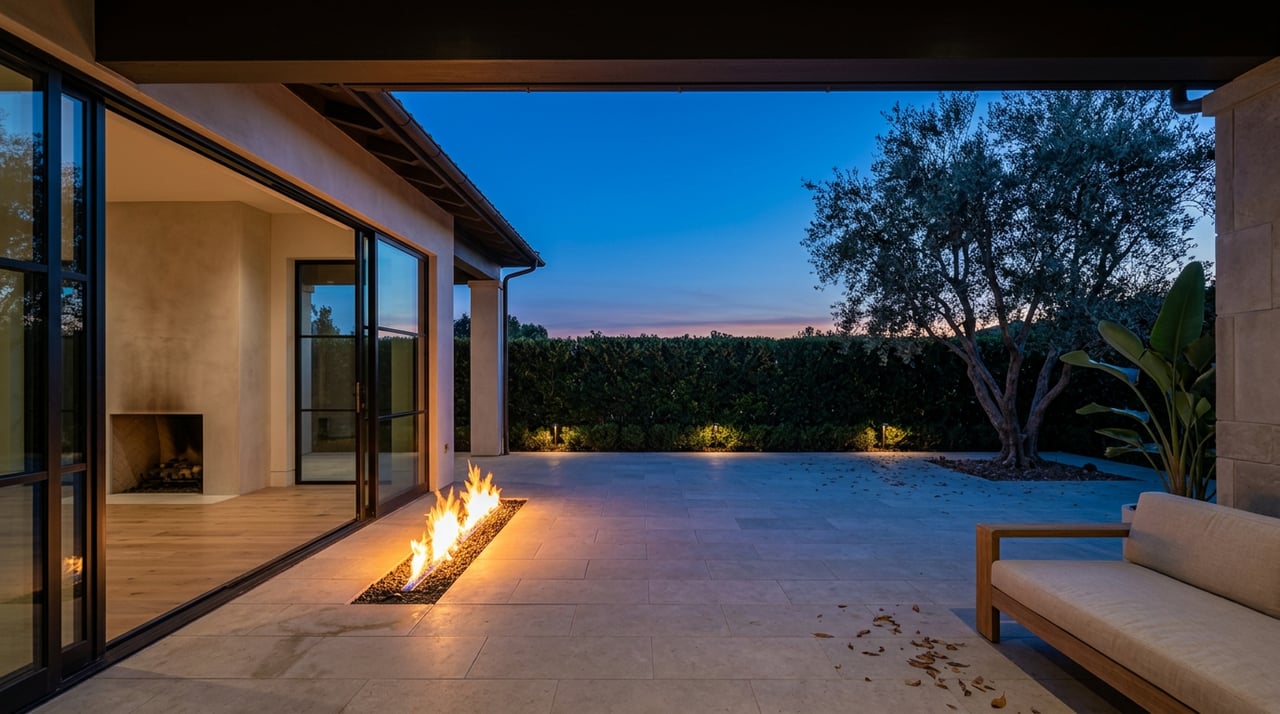
Main Street's Comeback Didn't Cost the City a Dime
September 24, 2026
September 24, 2026
Three years ago, the round bar at Circle Bar went dark and the neon stayed off. This summer it came back on, in the same room, under the same nearly 80-year-old sign, run now by the owners of Hinano Cafe. Nobody voted on it. No fund paid for it. It just reopened, with a bigger dance floor and daily "Power Hours" from 6 to 7 p.m., because somebody decided Main Street was worth betting on again.
Three-quarters of a mile north, the city spent $3 million to get a similar feeling back on the Promenade.
That gap is the actual story of Santa Monica dining this fall. Not which restaurant has the best patio, though Main Street currently has a strong claim there too. It's that two stretches of the same city are recovering from the same stretch of hard years using two entirely different playbooks, and if you live here, that difference changes where you'll actually want to walk tonight.
Start with what's new on Main Street itself, because the list is longer than a typical season's worth of openings. Met Her on Main opened at 2651 Main Street in early August, the sixth restaurant from husband-and-wife owners Mindy and Vinny Kinne and their first in Santa Monica after five concepts clustered near La Cienega and Eighth. It's open 8 a.m. to 10 p.m. Sunday through Thursday and until 11 on weekends, running brunch and Belgian waffles in the morning before the kitchen turns to handmade pasta, Neapolitan pizza and Pan-Asian plates later in the day, with a hidden back patio the Kinnes call the secret garden holding around 50 to 60 people around a fireplace and water feature.
Down the block, Edgemar Restaurant + Lounge is serving coastal New American food inside the Frank Gehry-designed Edgemar complex, one of the few Main Street addresses where the building itself is as much a draw as the menu. And by the time you read this, La Diperie should have finished moving into 2441 Main, the ice cream and dessert concept the Main Street Business Improvement Association's own directory has listed as an end-of-summer opening.
None of that happened because a city fund told these operators to show up. When Vinny Kinne talked to the Santa Monica Daily Press about why his family chose Main Street for their first venture west of La Cienega, he put it plainly.
"We didn't come to Santa Monica just to open another restaurant. We came here because we believe in Main Street."
That's the tell. Independent operators who already have working restaurants elsewhere in Los Angeles picked this specific half-mile on their own terms, on their own money, because the street already had enough foot traffic and enough character to justify the bet.
Downtown and the Third Street Promenade needed help getting there. The pandemic thinned out retail foot traffic starting in 2020, and last year's wildfires added another setback on top of it. This spring, the city council approved the second phase of a broader downtown realignment plan, and it came with real money and real rule changes:
Mayor Caroline Torosis described it to the Los Angeles Times as a bet the city is making on itself, framing the entertainment zone as a way to get people walking the Promenade with a drink in hand again. Some of what's actually filling those storefronts has been national rather than local. Recent Promenade food news has leaned on chains, a Taco Bell and a Raising Cane's among them, filling space that independent restaurants aren't yet rushing to claim on their own. Alongside the storefront work, a separate group of residents launched the Santa Monica Block Fest, with co-founders Peter Trinh and Andrea Matic organizing experience-based events specifically to pull people back downtown, telling Spectrum News that the loosened alcohol rules are part of what's making the difference on the ground.
Both approaches are legitimate ways to rebuild a commercial corridor. But they are not the same approach, and if you've noticed that Main Street feels like it never really needed convincing while downtown still reads like a project in progress, this is why. One recovery is funded. The other is just operators making a bet.
The independent energy isn't confined to Main Street proper. A few blocks south on Ocean Park Boulevard, PonTu opened this summer at 3117 Ocean Park, in the space that had been home to the longstanding OP Cafe for years. Chef Richie Lopez is running seasonal Peruvian cooking with California coastal touches, ceviches and tiraditos built around whatever's fresh rather than a fixed script.
Near the pier, Westside Oyster Club took over the old Blue Plate Oysterette space, a Cape Cod-white-tiled raw bar from the same team behind The Albright on Santa Monica Pier, serving clam chowder bread bowls and lobster rolls alongside raw, grilled and fried oysters. And Pop's Bagels made the decision to move its actual bagel-making operation to Santa Monica from Brentwood this year, not just open a satellite counter but relocate production here, which is a different kind of commitment than a pop-up window.
Put those together with the Main Street list and a pattern holds. Every one of these is an operator who already had traction somewhere else in Los Angeles and chose to put down deeper roots here, on the strength of the street itself rather than an incentive package.
If you're deciding where to spend an evening this fall, the practical version of all this is simple. Main Street right now rewards spontaneity. Circle Bar's Power Hour runs 6 to 7 p.m. daily, Met Her on Main is open straight through from breakfast to late dinner seven days a week, and PonTu and Westside Oyster Club are both new enough that reservations aren't yet the fight they'll likely become once word spreads further.
Downtown and the Promenade are worth watching rather than writing off. The twice-weekly farmers markets still run Wednesdays and Saturdays at Third Street and Arizona, the entertainment zone means you can now walk a drink between certain participating businesses during posted hours, and Block Fest's programming is specifically built to give the area a reason to be busy on nights it wasn't before. It's a different kind of evening than Main Street offers right now, built more around event and less around discovery, but it's an evening that's actively being built rather than one that's already arrived.
Either way, the interesting thing happening in Santa Monica this season isn't a single restaurant or a single street. It's that the city is running two different experiments on how a commercial corridor comes back after a hard stretch, and for once you can watch both of them from the same set of blocks.
Living here means you get a preview most visitors won't notice for another year or two. LeonardR Group works this stretch of the Westside closely enough to watch these shifts as they happen, not just report on them after the fact. If you're weighing what a changing block means for a home you already own here or one you're circling, reach out to LeonardR Group and give your home the Christie's touch.
Stay up to date on the latest real estate trends.
A Guide to Timeless Design for Your Malibu Property.
A Luxury Builder's Guide to Creating the Perfect Wine Cellar in Your Home.

Wine Bars to Visit for a Perfect Day in Malibu.
GIVE YOUR HOME THE CHRISTIE’S TOUCH
LeonardR Group, distinguished luminaries in the realm of real estate, boast an illustrious track record of orchestrating multimillion-dollar transactions in the opulent locales of Brentwood, Beverly Hills, Bel Air, and Malibu. Whether you aspire to buy or sell, rest assured that in their refined stewardship, you shall be endowed with unparalleled resources, consummate expertise, and a network of connections to secure the epitome of value.